Demystifying Federal Agencies: EPA and the Politicization of Water
- Insight
The U.S. government enforces clean water laws that protect human health and the environment. Anti-abortion activists want to hijack those laws to push their extreme agenda.
Summary
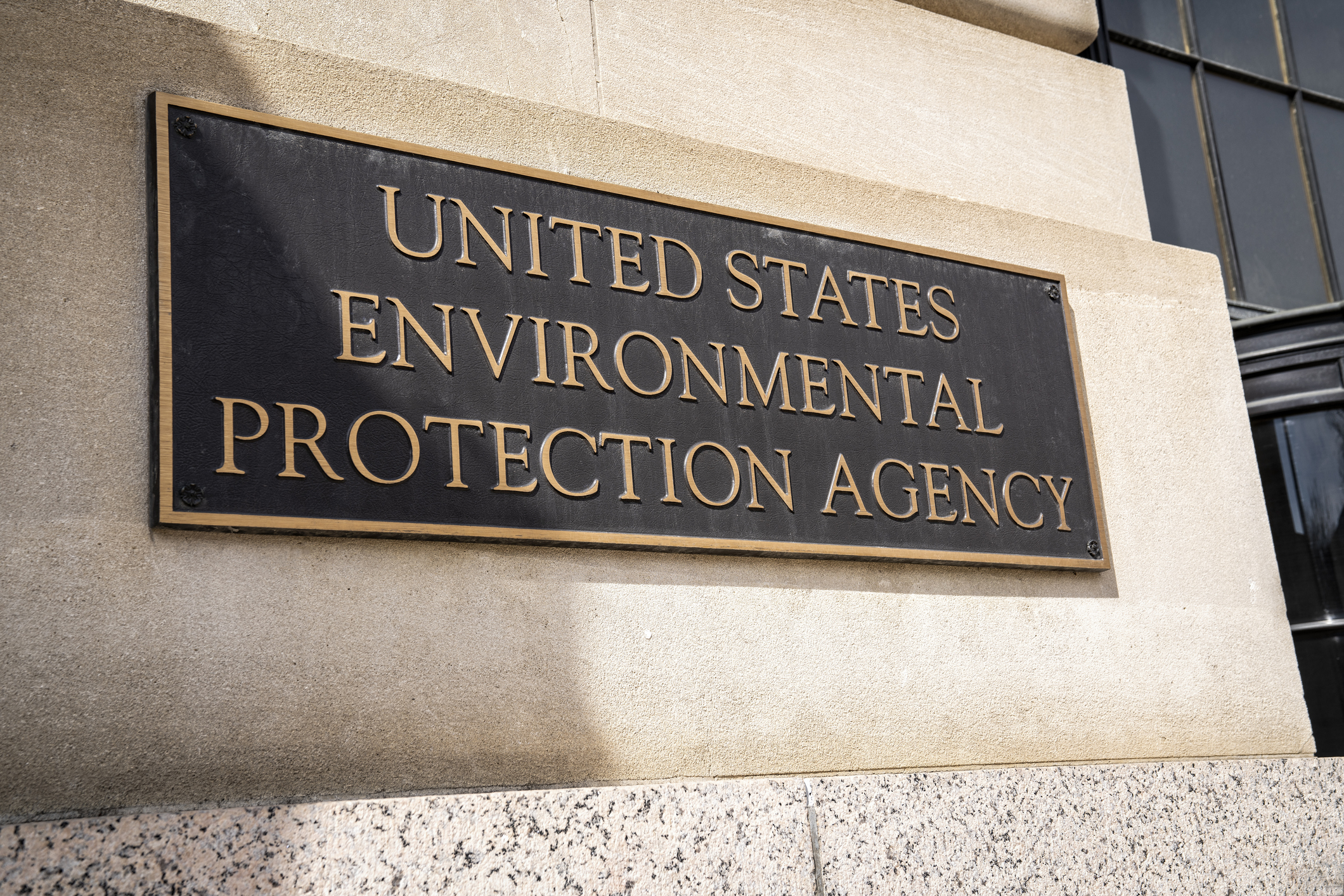
The Environmental Protection Agency (EPA) is the federal agency charged with ensuring that water is available and safe, based on scientific testing methods. As attacks on the abortion pill mifepristone continue to grow, anti-abortion extremists have peddled false environmental claims about these abortion pills. They have gone so far as to meet with EPA officials about the possibility of using water regulations to institute new, targeted restrictions on abortion pills. This campaign is baseless, in part, because EPA already continuously monitors water safety as part of its regular work. This fact sheet breaks down that (very wonky!) process.
What is the EPA?What is the EPA?
Since 1970, EPA has worked to respond to environmental problems, including water quality issues. EPA enforces federal laws, like the Clean Water Act and the Safe Drinking Water Act, conducts research, develops regulations, distributes grant funding, and provides technical assistance to public water systems.
EPA generally divides its water work into three different types: drinking water (what comes out of the kitchen sink); wastewater (the sewage system); and wetlands, oceans, and watersheds. This resource focuses on drinking water.
How does the EPA protect drinking water?How does the EPA protect drinking water?
Approximately 90% of the U.S. population gets its drinking water from a public water system regulated by EPA. Under the Safe Drinking Water Act, EPA is responsible for ensuring that over 140,000 public water systems properly test, treat, store, and distribute water. EPA does this by setting minimum national standards for water quality and identifying harmful “contaminants” that make water unsafe or unfit for drinking or other uses. However, EPA delegates primary testing and enforcement responsibility for contaminant tracking, surveillance, and management of public water systems to state, local, and Tribal governments.
How does the EPA determine water safety?How does the EPA determine water safety?
EPA determines drinking water safety risk based on whether it contains certain “contaminants” and the amount and concentration detected. Contaminant is a very broad term and refers to any substance or matter in water. The presence of contaminants does not necessarily indicate that the water poses a safety risk; further evaluation is necessary.
EPA has processes in place to determine whether certain contaminants, found at certain levels, may merit additional investigation. These processes can generally be divided into three steps: 1) identification; 2) evaluation; and 3) regulation.
- Identification: EPA publishes a Contaminant Candidate List (CCL) every five years. The CCL is a list of potential contaminants that are currently not subject to any national regulations but are scientifically known or anticipated to exist in public water systems and may require regulation in the future. If a contaminant is listed on the CCL, EPA could initiate subsequent water testing, risk assessment, and/or research related to that contaminant.
- Evaluation: EPA uses the CCL process to determine whether a contaminant requires ongoing monitoring. It does this through a process called the Unregulated Contaminant Monitoring Rule (UCMR), also updated every five years. In developing the UCMR, the EPA Administrator considers the possible adverse health effects of listed contaminants at the frequency, level, or concentration they are found. If a contaminant is included in the UCMR, then state, local, and Tribal water systems must test for it and report data back to EPA.
- Regulation: Lastly, EPA determines whether to actually regulate any contaminants. It does so through the National Primary Drinking Water Regulations (NPDWRs), which are reviewed every six years. The NPDWRs are standards and treatment techniques (e.g., disinfection, filtration) that public water systems must follow to limit the levels of identified contaminants in the drinking water. If EPA determines that regulation is not appropriate, it could still issue a health advisory.
What does this mean for mifepristone?
Earlier this year, the Trump administration directed career scientists at EPA to assess whether the agency could develop methods for detecting traces of mifepristone—a drug commonly used in medication abortion—in wastewater. Similarly, anti-abortion extremists and lawmakers are pushing to add mifepristone to the CCL and UCMR at the federal level, with the aim of requiring local public water systems to surveil the use of and limiting access to medication abortion.
To be clear, there is no scientific evidence that mifepristone impacts our drinking water. In fact, the Food and Drug Administration (FDA), the agency tasked with regulating mifepristone, has analyzed the potential environmental impacts of mifepristone as recently as January 2025 and concluded that “it is predicted to have no effect on the environment.”
Still, the risk to medication abortion access is real. Lawmakers at both the federal and state levels are introducing bills aimed at using environmental policies to surveil or restrict medication abortion. This is part of a larger anti-abortion strategy to stoke baseless fears about medication abortion that deter people from seeking, providing, or supporting abortion care and instead support the anti-abortion efforts to restrict medication abortion.
What does this mean for other drugs?What does this mean for other reproductive and maternal health drugs?
In addition to the attacks on mifepristone, anti-abortion advocates and lawmakers are also targeting misoprostol and methotrexate—drugs that are also used in abortion and miscarriage care. They are also targeting hormones used in birth control, hormone replacement therapy, and gender affirming care. Earlier this year, the EPA issued the Human Health Benchmarks for Pharmaceuticals (HHB-Rx): a list of FDA-approved pharmaceuticals which the agency states may occur in source waters (rivers, lakes, groundwater, and oceans) and/or treated drinking water. Misoprostol, methotrexate, and two hormones used in birth control, hormone replacement therapy, and gender affirming care were listed in the HHB-Rx. While the HHB-Rx are not a rule or regulation and cannot be enforced, they can be used by states, tribes, and local public water systems to determine if the levels of a pharmaceutical exceed the HHB-Rx recommended benchmark and need further investigation, which reproductive rights advocates fear might embolden state lawmakers, to surveil these drugs.
Defending against mis- and disinformationDefending against mis- and disinformation
In September 2026, EPA launched a study to test a broad set of potential drinking water contaminants seemingly outside of the CCL and UCMR processes detailed above. This research includes mifepristone, misoprostol, as well as several contraceptives and hormones used in birth control, hormone replacement therapy, and gender affirming care. One important limitation is that the test being used in this research can only inform a researcher if a substance is present in drinking water generally but cannot and does not tell a researcher the amount or concentration of the item present in the water.
Knowing the amount and concentration of a potential contaminant in water is necessary to determine and mitigate its possible adverse health effects, the main purpose of EPA’s safe drinking water regulations. As such, any results of this test could not be legitimately used for federal regulatory purposes. However, anti-abortion extremists and lawmakers frequently misuse and distort information related to reproductive drugs to limit access to them, including at the state level, regardless of the proven safety record of these drugs.
Safe drinking water and reproductive justiceSafe drinking water is necessary for reproductive justice
Equitable access to clean, safe drinking water is a reproductive justice issue because exposure to contaminated water can pose serious risks to reproductive and overall health. An estimated 2.2 million people in the U.S. live in homes without running water or basic plumbing, which constitutes a legitimate public health crisis and there are legitimate threats to clean water that harm human health. But instead of confronting these harms, anti-abortion organizations and lawmakers are trying to weaponize environmental laws and regulations to limit access to medication abortion.
How is the Center taking action?How is the Center taking action?
EPA’s mandate is to protect human health and safeguard the environment. The Center will continue to collaborate with environmental health and justice partners to ensure that EPA prioritizes clean, safe drinking water, based on rigorous scientific research and data that are free from mis- and disinformation, partisan pressure, and political bias. In May 2026, the Center’s submitted a Citizen Petition comment, debunking these unfounded environmental claims and highlighting mifepristone’s impressive safety record. Read more about the Center’s legal analysis and policy resources in response to the growing number of efforts to restrict access to medication abortion at our Medication Abortion Defense Portal.
Fuel the Fight for Reproductive Rights
Your donation allows us to defend reproductive rights, change policies, and amplify voices around the globe.